
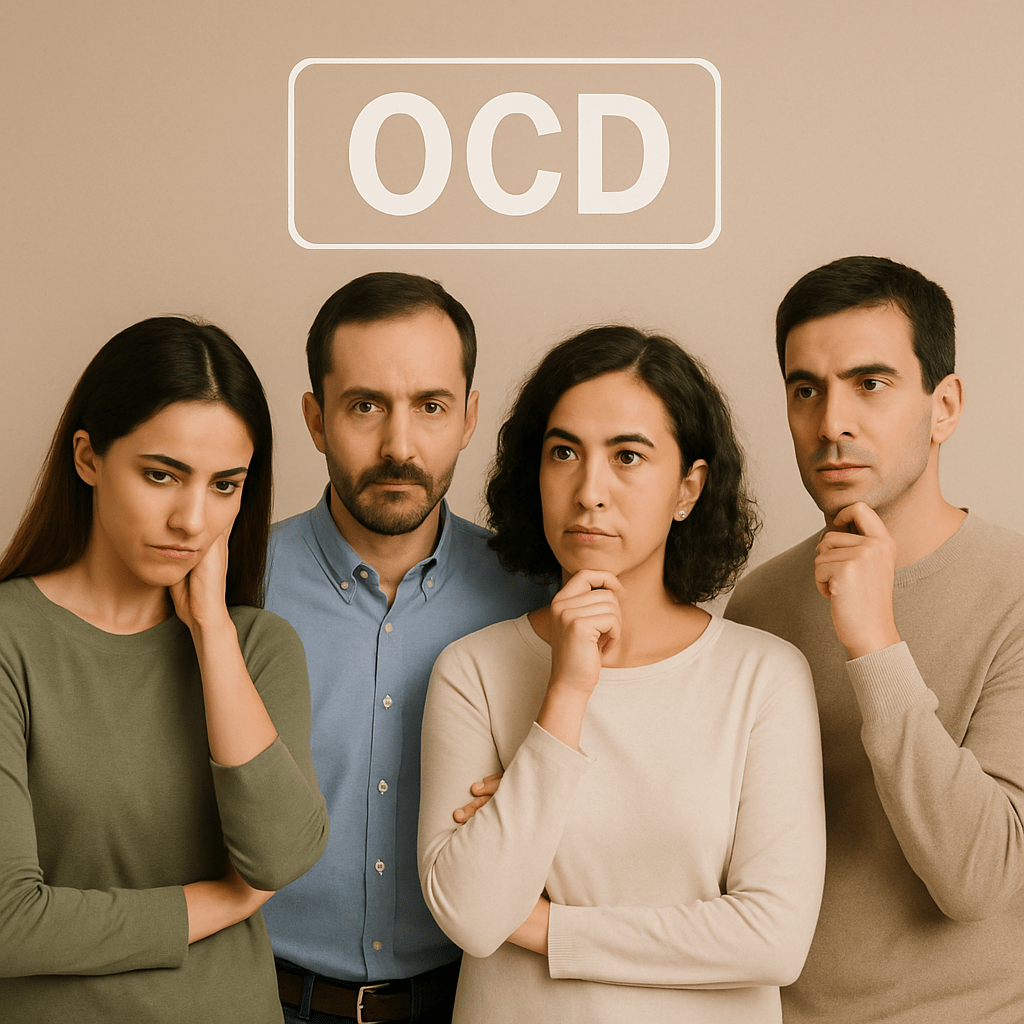
5 Lesser-Known Forms of OCD You Should Know About
5 Lesser-Known Forms of OCD: Let Me Tell You a Story
You won’t believe this, but a few months ago, I was working with a client – let’s call her Laura. She came to me convinced she had anger issues because she kept having these sudden, graphic thoughts about harming someone she loved. She was terrified of these thoughts. She thought she was going mad.
Here’s what I think – most people have no idea what OCD is. They hear “OCD” and think of cleaning or checking locks ten times before bed. But OCD can look completely different. It can latch onto anything you care about – your morals, your relationships, your safety.
I’m Federico Ferrarese, a CBT therapist based in Edinburgh specialising in OCD treatment, and today I want to talk to you like a friend. Let’s unpack five lesser-known forms of OCD that people often miss. Because the truth is, many sufferers go undiagnosed for years just because their OCD doesn’t fit the neat little cleaning-compulsion stereotype.
What is OCD Really?
So, first things first.
Obsessive Compulsive Disorder (OCD) is a disorder where people get unwanted, intrusive thoughts (obsessions) and feel the urge to do something to neutralise them (compulsions). According to OCD-UK, around 1.2% of the UK population has OCD, which is roughly 750,000 people (OCD-UK, 2024).
But here’s the catch – many forms of OCD are so hidden or misunderstood that people don’t even realise they have it. Let’s dig into these five lesser-known types.
1. Relationship OCD (ROCD)
What is ROCD?
Relationship OCD is when OCD targets your romantic relationships. You get intrusive doubts about whether you genuinely love your partner, or if they love you, or if they’re ‘right’ for you.
What Does ROCD Feel Like?
Imagine waking up every morning, looking at your partner, and instantly thinking:
-
“Do I really love them?”
-
“What if I’m just settling?”
-
“What if they’re not attractive enough for me?”
You feel anxious until you get certainty. So you check. You might:
-
Compare them to others.
-
Ask friends for reassurance.
-
Replay memories to ‘check’ if you felt love.
And then, guess what? The doubt comes back again. It’s an endless cycle.
Why Do People Miss ROCD?
Because people think relationship doubts are normal. Sure, everyone wonders now and then. But in ROCD, these doubts are intrusive, distressing, and compulsive.
Here’s a Real Example
One of my clients spent hours scrolling Instagram, comparing her partner to other men. She wasn’t even attracted to these men, but her brain said, “He’s better than your partner, isn’t he?”
She told me, “I thought I was just an awful girlfriend.”
Can you imagine living like that every single day?
2. Harm OCD
What is Harm OCD?
Harm OCD involves intrusive thoughts about harming others or yourself, even though you never want to act on them. These thoughts are ego-dystonic, meaning they go against your true values (Abramowitz & Jacoby, 2015).
What Does Harm OCD Look Like?
Picture this:
You’re chopping vegetables for dinner. Suddenly, a thought pops up:
-
“What if I stab my partner with this knife?”
Your heart pounds. You drop the knife. You tell yourself, “I’m a monster.”
You avoid knives. You ask your partner if they feel safe with you. You replay the thought over and over, trying to convince yourself you’d never act on it.
Why Do People Miss Harm OCD?
Because they’re too ashamed to tell anyone. They think they’re violent or dangerous. In reality, the very fact that these thoughts cause you distress shows you aren’t.
Here’s What I Think
It breaks my heart when clients say, “I’d rather die than act on these thoughts.” Because OCD is lying to them.
3. Existential OCD
What is Existential OCD?
Existential OCD is when your brain obsesses over life’s big, unanswerable questions. It’s like philosophy on steroids (Williams, 2012).
What Does It Feel Like?
People with Existential OCD might obsess over questions like:
-
“What is the meaning of life?”
-
“How do I know I exist?”
-
“What if none of this is real?”
They feel an intense urge to figure it out. They might:
-
Read philosophy for hours.
-
Seek reassurance from friends or therapists.
-
Mentally analyse every angle of existence.
But here’s the problem – these questions have no definitive answer. So OCD keeps them stuck in the loop.
Why Do People Miss Existential OCD?
Because it appears to involve deep thinking or intellectual curiosity, but for OCD sufferers, it’s distressing and unwanted. It interferes with daily life.
Real Story Example
I once worked with a young man who stopped enjoying music, movies, and dates with friends because all he could think about was “What if none of this is real?”
He told me, “I feel like a robot pretending to be human.”
Can you imagine how lonely that feels?
4. Sensorimotor (Somatic) OCD
What is Sensorimotor OCD?
Sensorimotor OCD occurs when you become hyper-aware of bodily sensations or automatic processes, such as breathing, blinking, or swallowing (Baer, 1992).
What Does It Feel Like?
Imagine noticing your swallowing. Then you can’t stop. Every few seconds, you swallow again to ‘check’ it’s working. Or you focus so intently on your breathing that it feels unnatural.
Why Do People Miss Sensorimotor OCD?
Because it appears to be a physical issue rather than a mental one, GPs might refer for ENT assessments or breathing tests before OCD is considered.
Real Story Example
One client told me,
“I can’t enjoy meals anymore. I’m so aware of my swallowing that I choke on food out of panic.”
Here’s what I think – sensorimotor OCD is one of the most torturous forms because you can’t ‘escape’ your body.
5. Scrupulosity OCD
What is Scrupulosity OCD?
Scrupulosity is OCD that targets your morals or religious beliefs. It creates intrusive doubts about whether you’re a good person or have sinned (Miller & Hedges, 2008).
What Does It Look Like?
For religious sufferers, it could be:
-
Repeating prayers perfectly or else fearing punishment.
-
Avoiding blasphemous thoughts.
-
Constantly confessing to religious leaders.
For non-religious sufferers, it could be:
-
Obsessing about whether you’re ‘morally pure.’
-
Fearing you’ve lied or cheated without realising.
Why Do People Miss Scrupulosity OCD?
Because it looks like deep morality or religious devotion. But for sufferers, it’s distressing, excessive, and compulsive.
Here’s a Quick Example
One of my clients spent hours daily analysing every sentence she said to ensure she hadn’t lied. She told me,
“I miss out on life because I’m stuck checking if I’m a good person.”
Why These Forms Are Missed
Let’s sum it up. These forms of OCD are often missed because:
-
They don’t involve visible compulsions, such as cleaning or checking.
-
They’re internal, involving mental rituals, avoidance, or reassurance-seeking.
-
They mimic normal worries but are intrusive, distressing, and time-consuming.
How Can ERP Therapy Help?
If any of these sound familiar, please know there is hope. Exposure and Response Prevention (ERP) is the gold-standard treatment for OCD. It involves gradually facing your fears without performing compulsions, retraining your brain to tolerate uncertainty (Foa et al., 2005).
As a CBT therapist based in Edinburgh specialising in OCD treatment, I use ERP daily with clients. Together, we:
-
Identify triggers.
-
Design exposures step by step.
-
Practice sitting with uncertainty until anxiety reduces.
It’s hard work, but incredibly freeing.
Stats About OCD You Might Not Know
You know what’s mad? OCD is far more complex and impactful than people think. Here are some stats and facts you probably haven’t come across:
OCD Prevalence and Impact
-
OCD affects 1.2% of the UK population, roughly 750,000 people (OCD-UK, 2024).
-
It is listed among the top 10 most disabling conditions by the World Health Organisation (WHO, 2022).
-
On average, people suffer from OCD symptoms for over 10 years before getting effective treatment (OCD Action, 2023).
Effects on Daily Life
-
Up to 50% of OCD sufferers report severe impairment in social or occupational functioning (Koran et al., 2000).
-
OCD sufferers spend an average of over 8 hours per day on obsessions and compulsions if untreated (Ruscio et al., 2010).
-
Children with OCD often miss school or underperform academically due to rituals and fatigue (Geller et al., 2001).
Neuroscience of OCD: Brain Circuits Involved
Here’s something most people don’t know – OCD isn’t just psychological. It has strong neurological roots.
-
OCD is associated with hyperactivity in the cortico-striato-thalamo-cortical (CSTC) circuit, which involves the orbitofrontal cortex, anterior cingulate cortex, and caudate nucleus (Menzies et al., 2008).
-
Increased activity is seen in the orbitofrontal cortex (evaluating consequences) and caudate nucleus (habit learning and filtering thoughts) (Saxena & Rauch, 2000).
-
Serotonin and glutamate imbalances are implicated, explaining why SSRIs and emerging glutamate-modulating treatments are used (Pittenger et al., 2011).
Genetic and Heritability Stats
-
OCD is highly heritable, with family studies showing a 3-to 12-fold higher risk in first-degree relatives (Nestadt et al., 2000).
-
Twin studies estimate heritability at 40-50% (van Grootheest et al., 2005).
Gender Differences
-
Childhood-onset OCD is more common in boys, often with tics and symmetry obsessions (Geller et al., 2001).
-
In adulthood, rates are roughly equal, but women report more cleaning compulsions, while men report more sexual or harm intrusive thoughts (Mathis et al., 2011).
Comorbidities
-
Around 90% of people with OCD have at least one other mental health condition (Ruscio et al., 2010).
-
25% of sufferers have purely mental compulsions (‘Pure-O’) (Abramowitz & Jacoby, 2015).
Treatment Statistics
-
ERP therapy results in a 60-80% symptom reduction in individuals who complete it (Foa et al., 2005).
-
Despite the effectiveness of ERP, only around 30-40% of sufferers receive it due to a lack of trained clinicians or awareness (NICE, 2022).
Interesting Neuroimaging Fact
Did you know? Functional MRI scans show that during compulsions, OCD sufferers experience temporary reductions in anxiety-related brain activity, reinforcing the compulsive cycle neurologically (Saxena & Rauch, 2000).
Final Thoughts: Let’s Wrap Up
Well, we’ve covered a lot today. ROCD, Harm OCD, Existential OCD, Sensorimotor OCD, Scrupulosity – five forms that are so often missed but can cause immense suffering.
Here’s what I think – the more we talk about these lesser-known types, the sooner people will get help instead of living in silent fear.
So, what do you think? Have you ever experienced any of these symptoms or known someone who has?
Baer, L. (1992). Implications of neurology for the understanding of obsessive-compulsive disorder. Journal of Clinical Psychiatry, 53(Suppl), 29–33.
Geller, D. A., Biederman, J., Jones, J., Shapiro, S., Schwartz, S., & Park, K. S. (2001). Is juvenile obsessive-compulsive disorder a developmental subtype of the disorder? A review of the pediatric literature. Journal of the American Academy of Child & Adolescent Psychiatry, 40(2), 104–118. https://doi.org/10.1097/00004583-200102000-00009
Koran, L. M., Thienemann, M. L., & Davenport, R. (2000). Quality of life for patients with obsessive-compulsive disorder. American Journal of Psychiatry, 157(6), 914–920. https://doi.org/10.1176/appi.ajp.157.6.914
Mathis, M. A., Alvarenga, P. G., Funaro, G., Torresan, R. C., Moraes, I., Torres, A. R., & Hounie, A. G. (2011). Gender differences in obsessive–compulsive disorder: A literature review. Brazilian Journal of Psychiatry, 33(4), 390–399. https://doi.org/10.1590/S1516-44462011000400014
Menzies, L., Chamberlain, S. R., Laird, A. R., Thelen, S. M., Sahakian, B. J., & Bullmore, E. T. (2008). Integrating evidence from neuroimaging and neuropsychological studies of obsessive-compulsive disorder: The orbitofronto-striatal model revisited. Neuroscience & Biobehavioral Reviews, 32(3), 525–549. https://doi.org/10.1016/j.neubiorev.2007.10.005
Nestadt, G., Samuels, J., Riddle, M., Bienvenu, O. J., Liang, K. Y., LaBuda, M., Walkup, J., Grados, M., & Hoehn-Saric, R. (2000). A family study of obsessive-compulsive disorder. Archives of General Psychiatry, 57(4), 358–363. https://doi.org/10.1001/archpsyc.57.4.358
OCD Action. (2023). OCD facts and statistics. Retrieved July 6, 2025, from https://ocdaction.org.uk
OCD-UK. (2024). What is OCD? Retrieved July 6, 2025, from https://www.ocduk.org/ocd/what-is-ocd/
Pittenger, C., Bloch, M. H., & Williams, K. (2011). Glutamate abnormalities in obsessive compulsive disorder: Neurobiology, pathophysiology, and treatment. Pharmacology & Therapeutics, 132(3), 314–332. https://doi.org/10.1016/j.pharmthera.2011.09.003
Ruscio, A. M., Stein, D. J., Chiu, W. T., & Kessler, R. C. (2010). The epidemiology of obsessive–compulsive disorder in the National Comorbidity Survey Replication. Molecular Psychiatry, 15(1), 53–63. https://doi.org/10.1038/mp.2008.94
Saxena, S., & Rauch, S. L. (2000). Functional neuroimaging and the neuroanatomy of obsessive-compulsive disorder. Psychiatric Clinics of North America, 23(3), 563–586. https://doi.org/10.1016/S0193-953X(05)70181-7
van Grootheest, D. S., Cath, D. C., Beekman, A. T., & Boomsma, D. I. (2005). Twin studies on obsessive–compulsive disorder: A review. Twin Research and Human Genetics, 8(5), 450–458. https://doi.org/10.1375/183242705774310060
Williams, M. T. (2012). Cultural competence in the treatment of obsessive compulsive disorder. Journal of Obsessive-Compulsive and Related Disorders, 1(4), 203–210. https://doi.org/10.1016/j.jocrd.2012.06.002
World Health Organisation. (2022). Depression and other common mental disorders: Global health estimates. World Health Organisation.




0 Comments