
Body Dysmorphic Disorder: 5 Effective Treatments
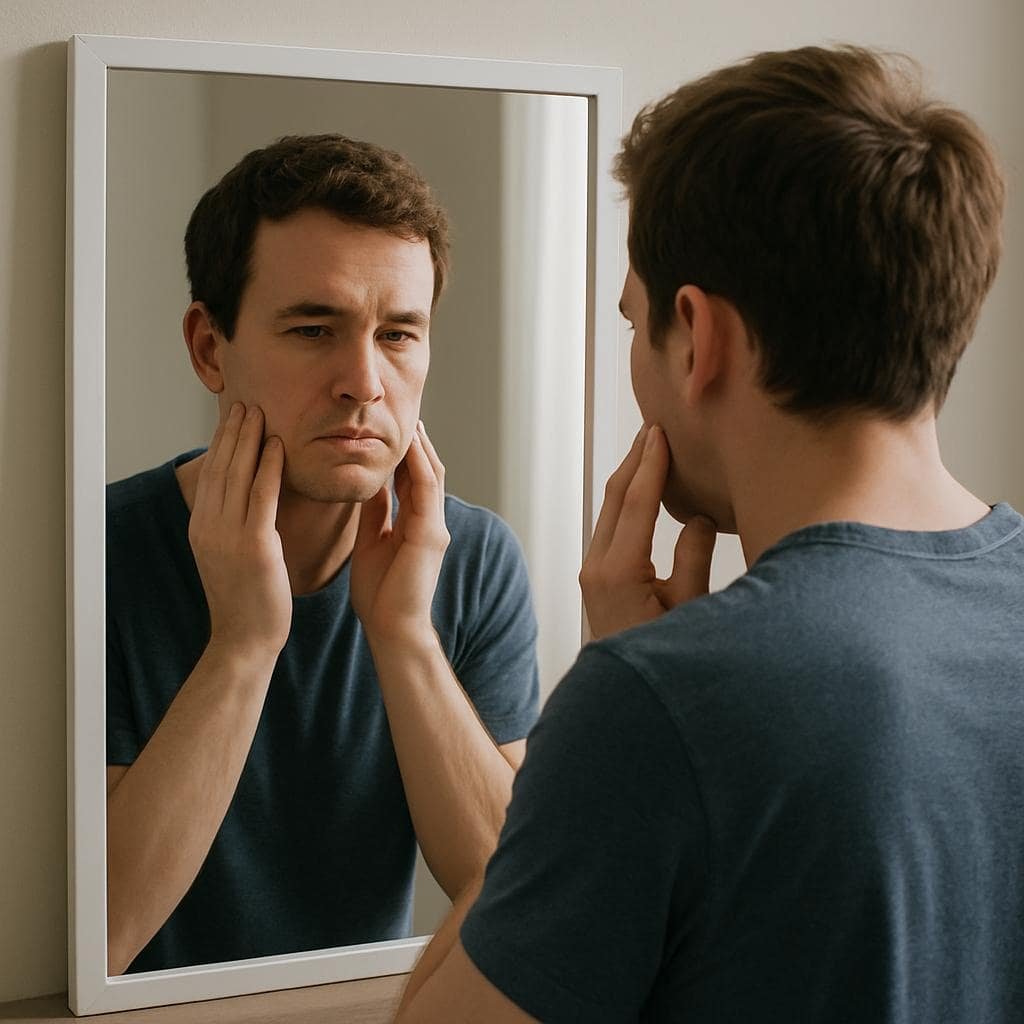
Imagine standing in front of the mirror, heart pounding, convinced that something is terribly wrong with the way you look. Maybe it’s your skin, maybe your nose, maybe something no one else even notices. Hours slip away with checking, covering up, or comparing yourself to others. You feel like everyone is staring at you. That used to be the everyday reality for many people I’ve met in therapy. And it’s exhausting.
Hi there, I’m Federico Ferrarese, a CBT therapist based in Edinburgh, specialising in OCD treatment. I also work closely with people struggling with Body Dysmorphic Disorder. I recently attended the 30th Annual OCD Conference in Chicago, where experts like Dr Katharine Phillips shared the latest on BDD treatments—from therapy to medication to family interventions. Let me take you through what we know works best, in simple, friendly language. Because BDD can feel isolating, but you’re definitely not alone.
Why This Matters—BDD in Real Life
A Hidden Struggle in the UK
BDD affects about 2% of UK adults—that’s over a million people. Yet many live with symptoms for nearly a decade before getting help. The risk of suicide is shockingly high: lifetime suicidal ideation affects up to 80%, and attempts are reported in 24–28% of cases (Phillips et al., 1997; 2005).
Teenagers and Young Adults
Among adolescents, prevalence rates reach up to 5%, with girls more affected than boys (Krebs et al., 2025). Sadly, around 30% of sufferers become housebound, and 50% report being unemployed because of the condition (BDD Foundation, n.d.).
Recovery Is Real
Here’s the hopeful bit: with the right treatment, up to 76% of people recover, and recurrence rates stay low at around 14% (BDD Foundation, n.d.). That’s why getting the right diagnosis and care matters so much.
Understanding BDD—Key Features from the Conference
At the 30th Annual OCD Conference in Chicago, Dr Katharine Phillips spoke with such clarity and compassion about Body Dysmorphic Disorder that many of her words felt like they’d been written by clients themselves. She didn’t just rattle off a checklist. She explained how BDD feels—visceral, isolating, and deeply distressing.
The DSM-5 Criteria: What BDD Really Is
Dr Phillips reminded us that BDD isn’t about vanity. It’s about feeling completely overwhelmed by perceived flaws—flaws that others might not notice at all. These concerns get stuck in your mind, like a loop you can’t switch off.
Here’s what defines BDD according to DSM-5:
-
Preoccupation with perceived flaws in appearance—tiny or invisible to others, yet they feel huge to you.
-
Repetitive behaviours—like mirror checking, excessive grooming, or comparing yourself to people online.
-
Clinically significant distress or impaired functioning—it’s more than worry; it gets in the way of work, relationships, and even leaving the house.
-
Not better explained by an eating disorder—even if the concern is about weight, BDD is different (Phillips et al., 2012).
And here’s something that hit me hard: many people with BDD experience poor insight—they genuinely believe that others are noticing and judging their flaw. One study found that many spend three to eight hours a day obsessing over their appearance (Phillips et al., 1993; 2012). Imagine losing that much time every day just to anxiety and self-doubt.
Stories Behind the Symptoms
One client called it “my mind won’t let me rest until I know I look right.” She’d spend half her morning changing her hair five times, checking angles, comparing her reflection to photos online. She wasn’t being vain—she was stuck in a loop that made her feel unsafe in her own skin.
Another told me, “I avoid all social events because I feel like my skin is broken, and people will see how flawed I am.” It wasn’t about being self-conscious—it was about fear and shame wrapped tight in looking in a mirror or standing under daylight.
Overlaps and Differences: BDD vs OCD or Anxiety
It’s easy to see why BDD can get mixed up with OCD or social anxiety. After all, BDD shares intrusive thoughts and checking behaviours. But here’s the kicker: OCD might involve fearing you’ve left the stove on, whereas BDD obsessions are much more personal—like your face is grotesque. That matters for treatment—it’s why tailored CBT for BDD is essential, not just general anxiety therapy (Frierson & Joshi, 2019).
BDD often brings darker emotions too: intense shame, disgust, even self-hatred—far more than your typical self-doubt. And yes, it’s a significant risk factor for self-harm and suicidal thoughts. That emotional burden needs to be acknowledged and addressed.
Evidence-Based Treatments—What Really Works
The presentations made it clear that two treatments consistently work for BDD: CBT tailored to BDD and serotonin-reuptake inhibitor medications (SRIs/SSRIs).
Cognitive Behavioural Therapy (CBT) for BDD
When I say CBT helps with BDD, it might sound clinical—but it’s anything but cold. Imagine sitting with someone who’s been tearing themselves down over a small mark on their skin, or obsessing over every angle of their face for hours. CBT is like gently opening the curtains on that stormy inner world. It lets us see the clouds—and starts helping them clear, day by day.
Seeing What CBT Gently Untangles
CBT isn’t just a set of techniques. It’s about helping clients:
-
Notice and name distorted beliefs about appearance—like “My chin is grotesque” or “Everyone notices that scar.”
-
Challenge these unhelpful thoughts by looking for real evidence.
-
Embrace Exposure and Response Prevention (ERP)—facing fears and resisting the urge to compulsively check.
-
Learn perceptual retraining—seeing yourself as a whole person, not zoomed into a flaw (Phillips et al., 2005).
-
Apply habit reversal when behaviours like skin-picking or hair-plucking start to take over.
In therapy, we might begin with something small—standing in front of a mirror without touching up, or stepping out without obsessively checking our reflection. Over time, those moments get easier, and anxiety begins to soften.
What Living With BDD Feels Like—and Why CBT Matters
One client told me, “I spent hours comparing myself to strangers online, convinced I looked awful beside them.” Another said, “I didn’t dare let daylight touch my skin—I felt all my flaws would glow.” These aren’t just worries—they’re full-blown loops that hijack life.
CBT helps unpack that loop. It shines a new, kinder light on what’s going on. When I guide someone through ERP, they might say, “My heart feels like a drum,” and that’s okay. We stand with it. Because each time they don’t check, they prove anxiety isn’t an enemy—it’s just a feeling passing by.
Evidence That CBT Works—Especially When Tailored for BDD
CBT adapted precisely for body dysmorphic disorder isn’t guesswork. It’s what’s backed by evidence. Both individual and group CBT beat no-treatment waitlists in studies, and structured CBT—especially with ERP—is the top tested psychosocial treatment for BDD (Prazeres et al., 2013; Phillips et al., 2011).
The NICE guidelines in the UK are clear: CBT tailored to BDD is the first-line treatment for individuals with this condition, regardless of age (ACAMH, 2024; Ghosh, 2025). That means, yes, your GP or IAPT should consider referring you for this kind of help, not just generic anxiety therapy.
Stories That Show Change Is Real
Let me tell you about Emma, who’d constantly feel her nose wasn’t right. She’d tilt, angle, pinch—“just checking”—for hours. We started with ten seconds in front of the mirror without touching up. The first session brought tears—but then she whispered, “It’s not as bad as I thought.” Two weeks later, she stayed there for a full minute, anxiety rising only to fall. She told me, “It felt like standing up to a bully inside my head.” That’s powerful.
Or Mark, who wouldn’t leave the house without makeup, convinced people would laugh at him. With ERP, he took one step at a time—just stepping outside without touching up. Each time, his world widened. Now he says, “I didn’t need the makeup to be okay in the world.”
Adjunctive Psychological Techniques
Sometimes CBT is combined with:
-
ACT (Acceptance and Commitment Therapy) for accepting uncomfortable thoughts.
-
DBT (Dialectical Behaviour Therapy) for managing intense emotions and building distress tolerance.
These aren’t stand-alone treatments for BDD, but they enhance the results of CBT (Phillips, 2025).
Family Interventions
Families often, without meaning to, “accommodate” the disorder by reassuring sufferers or helping them avoid anxiety triggers. Therapy teaches families to reduce these behaviours while staying supportive—vital for children and adolescents (Phillips et al., 2025).
Medication for BDD—Insights from Dr Phillips
SSRIs as First-Line Treatment
SSRIs help with obsessive thoughts, compulsive behaviours, anxiety, depression, and even suicidal thinking. They must be taken:
-
At the right dose: Often higher than for depression.
-
For long enough: At least 12–14 weeks, with 3–4 weeks at the target dose before judging effectiveness (Phillips et al., 2006; 2013).
-
Every day: Consistency matters for brain chemistry to stabilise.
Commonly used SSRIs include fluoxetine, sertraline, escitalopram, paroxetine, and fluvoxamine.
What If One SSRI Doesn’t Work?
Options include:
-
Increasing the dose.
-
Switching to another SSRI.
-
Adding another medication like buspirone or, rarely, antipsychotics such as aripiprazole (Phillips, 2017).
-
Considering SNRIs like venlafaxine if several SSRIs fail.
Clomipramine, an older SRI, sometimes works when SSRIs don’t—but needs ECG monitoring at higher doses.
Cosmetic Treatment? Not Recommended
One powerful message from the conference: cosmetic procedures rarely help and can make things worse. Because the problem lies in perception, not appearance, changing the body doesn’t fix BDD distress (Feusner et al., 2007; 2010; 2015).
How Treatment Fits Together
-
Mild BDD: Start with CBT alone.
-
Moderate BDD: CBT or SSRIs—patient choice.
-
Severe BDD: Combine CBT + SSRIs for best results (NICE, 2005).
Adjunctive techniques and family work support recovery but don’t replace core treatments.
What Most Websites Don’t Tell You
-
Recovery rates are high with the right care.
-
Family accommodation plays a huge role in maintaining symptoms.
-
Perceptual retraining and ERP are game-changers.
-
Treatment credibility—believing therapy will help—actually predicts better outcomes (Costilla-Reyes & Talbot, 2025).
My OCD Work and ERP—Why It Matters
Many people I see for OCD also have BDD. ERP therapy helps both—whether resisting hand-washing compulsions or mirror checking. As a CBT therapist in Edinburgh specialising in OCD, I use ERP to help people gradually face fears and reduce compulsive behaviours until anxiety loses its grip.
A Story of Change
One client, let’s call her Sarah, spent five hours a day checking her skin. Social events terrified her. We began ERP by covering mirrors for ten minutes, then visiting a café without makeup. At first, the anxiety spiked. But slowly, she realised nothing catastrophic happened. After a few months, she was working again, seeing friends, laughing more. She told me, “I feel like I got my life back.” That’s what treatment can do.
FAQs About BDD Treatment
How long does treatment take?
CBT typically lasts 12–20 sessions, sometimes longer for severe cases.
Are SSRIs safe?
Yes, most people tolerate them well. Side effects are often mild and temporary (Phillips et al., 2016).
Can therapy be online?
Yes, CBT and ERP work well virtually if structured correctly.
What about families?
Family education improves recovery rates, especially in young people.
Is recovery really possible?
Absolutely—three-quarters of people recover with proper treatment.
Conclusion
So, that’s what we now know about treating Body Dysmorphic Disorder—from CBT and ERP to medication, family interventions, and even newer techniques like ACT or DBT. Recovery takes time, but it’s real, and it’s happening for people every day. I’m Federico Ferrarese here in Edinburgh, and I believe you deserve to feel comfortable in your own skin. After reading all this, can you imagine what your life might look like without BDD running the show?
References:
BDD Foundation. (n.d.). BDD Statistics. Retrieved from https://bddfoundation.org/information/statistics/
Costilla-Reyes, O., & Talbot, M. (2025). Predicting treatment response in BDD with interpretable machine learning. arXiv.
Feusner, J. D., et al. (2007). Abnormal visual processing of faces in BDD. Archives of General Psychiatry, 64(12), 1417-1425.
Krebs, G., et al. (2025). Prevalence and impairment in youth with BDD. Journal of Child Psychology and Psychiatry.
NHS. (n.d.). Body dysmorphic disorder (BDD). Retrieved from https://www.nhs.uk/mental-health/conditions/body-dysmorphia/
NICE. (2005). Obsessive-compulsive disorder and body dysmorphic disorder: Treatment guidelines (CG31).
Phillips, K. A., et al. (1993–2025). Multiple studies on BDD epidemiology and treatment.
Veale, D., et al. (2016). Prevalence of BDD in cosmetic settings. Aesthetic Surgery Journal, 36(2), 1-9.




0 Comments