
OCD and PTSD: 7 Ways to Embrace Hope Throughout Life
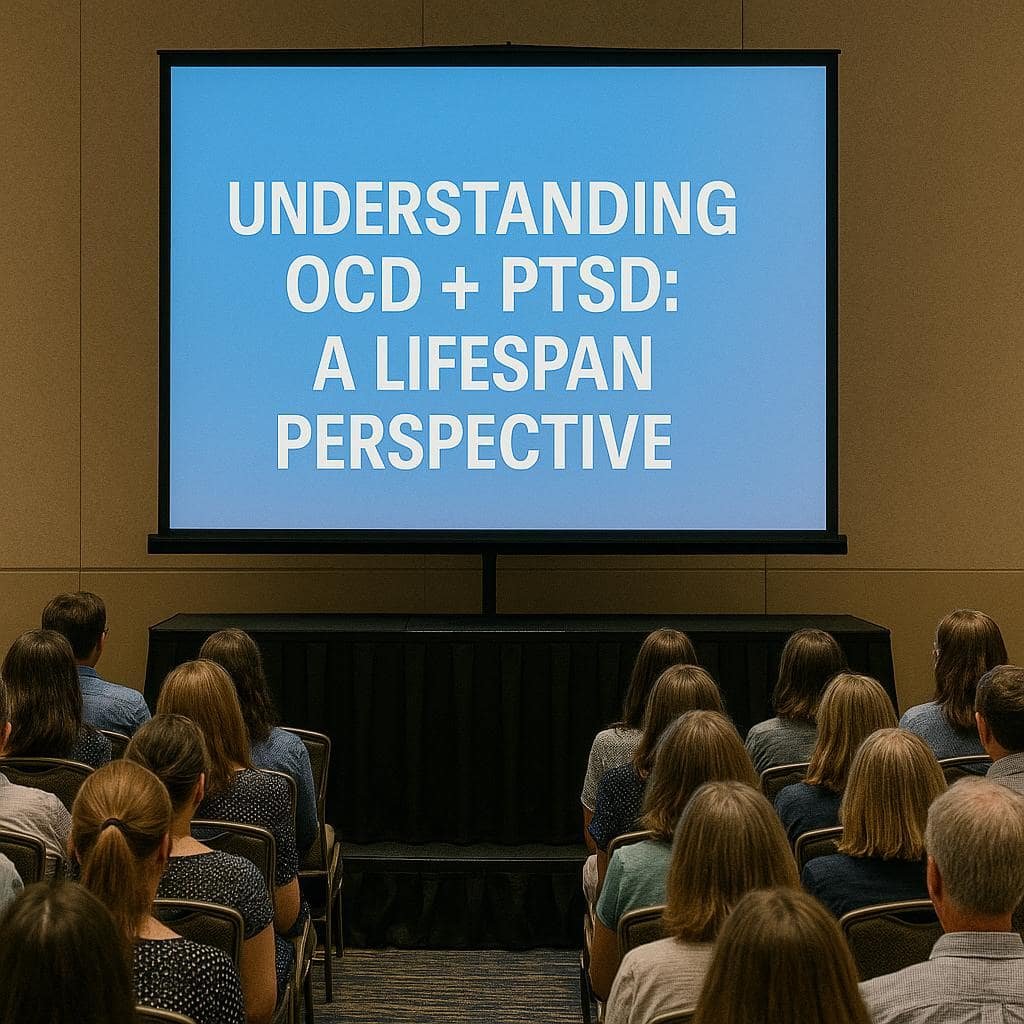
I want to start with a story, the way I’d tell it to a close mate over coffee. Last July, I was virtually attending the 30th Annual OCD Conference in Chicago. One of the sessions, “A Complex Comorbidity, Part Two: OCD + PTSD Across the Lifespan,” caught my attention. It was presented by Dr. Nathaniel Van Kirk, Dr. Lauren Wadsworth, Breanna Myers, Nicole Baez, and two powerful advocates with lived experience, Allie Mills and Sidney Lodge. Listening to them unpack the overlap between OCD and PTSD—across children, teens, and adults—was eye-opening.
As I listened, I thought about clients I’ve worked with here in Edinburgh. Some came in convinced they “just” had OCD, when in fact trauma was sitting in the background, pulling strings. Others carried a PTSD diagnosis but hadn’t realised that their compulsions and rituals were more than just coping—they were part of OCD. The overlap isn’t just academic. It changes treatment, recovery, and everyday life. And that’s why this conversation matters.
So, let’s dive into what this all means—simply, clearly, and with the latest research.
Why This Topic Matters
When OCD and PTSD show up together, life gets tougher. Symptoms become louder, more confusing, and harder to treat if we don’t recognise both sides.
In the UK, about 2.9% of adults live with PTSD. Of these, nearly 28% also meet criteria for OCD (Qassem et al., 2021). That’s not a small overlap—it’s a significant chunk of people whose struggles are often hidden behind one label or the other.
Globally, studies show that 19%–25% of people with OCD also have PTSD, and 31%–41% of people with PTSD also have OCD (Ruscio et al., 2010; Fontenelle et al., 2021). To put that in perspective, OCD affects around 1% of the general population. Having PTSD makes you about ten times more likely to also have OCD (Brown et al., 2001; Torres et al., 2016).
Those numbers aren’t just stats—they represent real people stuck in cycles of fear, rituals, flashbacks, and avoidance. People whose recovery depends on us untangling this knot.
OCD and PTSD: Where They Overlap
At first glance, OCD and PTSD might appear entirely separate. But sit with someone who’s lived with both—and let’s be honest, I’ve done that many times—you’ll see the hidden threads linking them with surprising clarity.
I’ll never forget working with Claire, a client from Leeds. She’d repeat the phrase “I’m safe” every time she walked past certain places. It seemed like a ritual—like classic OCD—but really, it was about silencing her memories of a violent attack on that same street. Every repetition felt like a small shield. When we talked it through, she whispered, “It’s what keeps me from feeling that rush of fear again.” That mix of ritual and memory—that’s where OCD and PTSD overlap in the most painful, yet understandable way.
In both conditions, you get intrusive thoughts that arrive uninvited. With PTSD, they often look like flashbacks, nightmares, or memories anchored to a specific traumatic event. With OCD, they come as nagging “what if” thoughts—What if I’m responsible? What if I failed? What if someone gets hurt? They can pop up at any moment and take over your headspace. Both take root in fear—one grounded in memory, the other rooted in what-ifs.
Avoidant behaviours are a shared tool, too. Think about avoiding social situations after trauma versus avoiding dirt or germs to quell the discomfort of OCD. I’ve seen clients who won’t drive past certain landmarks because it reconnects them with trauma, and others who won’t touch anything on a communal table for fear of contamination. Both are safety stories your brain tells itself—“If I avoid this, maybe I’ll feel safe.”
But there’s also a key distinction. PTSD thoughts are tethered to the past: a memory, a scream heard in the dark, a body’s freeze response. OCD thoughts, by contrast, project forward—What if I caused something terrible? What if a catastrophe is waiting out there? That’s the difference between a haunting memory and a dread-soaked imagination.
And what about the rituals themselves? In PTSD, you often see actions meant to prevent re-experiencing that trauma: double-checking alarms, rehashing the event in your mind to stay “in control,” or physically avoiding places that reclaim that fear. In OCD, rituals are more rigidly patterned—meticulous hand washing, counting, repeating, and arranging. The aim? To neutralise the anxiety or prevent an imagined disaster (Van Kirk, 2015).
Because these symptoms can overlap so much, misdiagnosis is common. I remember “Aiden” from Manchester—he was obsessed about whether he’d locked his flat before bed. It looked like you’d expect OCD. But it only made sense when we talked about him waking up in a stranger’s bed after being mugged. That checking? It was trauma, not just obsession.
Researchers have long noted this overlap. Studies suggest that people with PTSD are at much higher risk of developing OCD, and when both conditions exist together, symptoms are usually more severe and harder to untangle (Brown et al., 2001; Fontenelle et al., 2021; Ruscio et al., 2010; Torres et al., 2016). In fact, some evidence suggests the risk for OCD is up to ten times higher in those with PTSD (Torres et al., 2016).
And listen—community surveys in the UK show that nearly a third of people with PTSD will also experience OCD at some point, and about a fifth of those with OCD meet criteria for PTSD during their lifetime (Qassem et al., 2021; Ruscio et al., 2010). That might sound like a statistic, but it’s more than that—it’s a reminder that OCD and PTSD comorbidity isn’t rare at all. It’s happening in homes across the UK, quietly affecting people who often don’t know why they feel trapped in both past memories and future fears.
When we recognise the connection—when we think in terms like “complex comorbidity across the lifespan”—we’re better able to validate someone’s experience. We can say: “This isn’t about failure. This is survival that’s just gone on too long.”
I remember sitting with Emily, a young woman from Bristol who’d replay an argument in her head again and again until she felt prepared for it next time. She called it “practising” her trauma, but it was also obsessive. When we talked about both parts—OCD and PTSD together—something shifted. Just acknowledging that overlap didn’t end Emily’s loops, but it made us into a team aiming for relief.
So, recognising that OCD and PTSD overlap doesn’t just help with accuracy. It helps humans feel seen. It’s the difference between being told, “You’re stuck with this forever,” versus, “I hear you. Let’s untangle this together.”
How Trauma Shapes OCD Across the Lifespan
One of the most fascinating parts of the Chicago panel, led by Dr. Van Kirk, Dr. Wadsworth, Myers, Baez, Mills, and Lodge, was how OCD + PTSD looks different at various ages.
Children and Adolescents
Kids who go through trauma don’t always talk about it directly. Instead, it sneaks out in play, in nightmares, or in temper tantrums. Some develop compulsions—like checking, repeating, or mental rituals—that feel protective. A child might insist on saying goodnight in a certain way because it feels like the only thing standing between them and another frightening event.
Without recognising the trauma backdrop, these behaviours might be labelled “just OCD.” Treatment then risks missing the deeper wound.
Adults
In adults, trauma exposure can amplify OCD symptoms. Someone who survived an assault might develop contamination fears—not because of germs in general, but because their brain ties safety rituals to preventing re-experiencing danger.
And unlike kids, adults often carry layers of trauma. Research shows the effects of trauma on OCD are cumulative—the more trauma, the worse the OCD severity, and the lower the quality of life (Pinciotti et al., 2021).
Older Adults
In older adults, PTSD can resurface as memories sharpen with age, while OCD rituals may become more entrenched. Sadly, this group is often overlooked in both research and clinical practice, leaving many unsupported.
What the Latest Research Tells Us
The past few years have seen some fascinating studies that have pushed our understanding forward.
Hybrid Models and Symptom Structures
Pinciotti and colleagues (2022) studied whether OCD + PTSD formed a unique condition or just an overlap. Their findings? There’s no neat, separate “OCD-PTSD factor.” Instead, symptoms blend in a hybrid way. That means trying to force them apart clinically doesn’t always work—we need to look at the whole picture.
Assessment Tools
In 2024, Fenlon et al. published a study on assessing OCD + PTSD together. They warned that clinicians often misdiagnose because symptoms mimic each other. They recommended using structured interviews and trauma-informed assessments to tease apart whether a compulsion is truly OCD, trauma-driven, or both. That clarity is crucial for treatment planning.
CPTSD Presenting Like OCD
A striking case report from 2025 (Albert & Chen) described a man whose OCD symptoms—sexual intrusive thoughts and compulsions—were actually rooted in complex PTSD. Traditional OCD treatment alone wasn’t enough. Once CPTSD was addressed, his symptoms eased. It shows just how sneaky this comorbidity can be.
Neurobiology
Brain imaging studies add another layer. Both OCD and PTSD involve hyperactivity in the amygdala (the brain’s alarm system) and disrupted communication with the prefrontal cortex (our rational thinking centre). People with complex PTSD show unique patterns—like stronger insula activity—suggesting even deeper overlap at the brain level (Albert & Chen, 2025).
Treatment Insights — ERP and Beyond
Now, here’s where things get really practical.
Exposure and Response Prevention (ERP)
ERP is the gold standard for OCD. It means gradually facing feared situations (exposure) without engaging in the ritualistic response (response prevention). Over time, the brain learns that the feared outcome doesn’t happen, and anxiety decreases.
In my practice as a CBT therapist in Edinburgh, specialising in OCD treatment, I’ve seen ERP transform lives. People who once spent hours trapped in compulsions reclaim their time, relationships, and peace of mind.
When Trauma Is in the Mix
But—and this is a big but—standard ERP sometimes needs tweaking when PTSD is also present.
Imagine asking someone with trauma to face their fear head-on without considering the trauma context. That can backfire, reinforcing distress instead of easing it.
Instead, we adapt. We might blend ERP with:
Cognitive Processing Therapy (CPT): Helping reframe trauma-related beliefs.
Prolonged Exposure (PE): Safely revisiting trauma memories until they lose their sting.
Trauma-focused CBT: Especially useful for kids and teens.
The key is sequencing and balance—deciding whether to treat OCD first, trauma first, or both together. And that depends on the individual, their safety, and their readiness.
Real-Life Impact — Misdiagnosis and Delayed Care
Here’s the tough part. When clinicians miss the overlap, people suffer longer.
Some get ERP without trauma work, and they drop out because it feels unbearable. Others get trauma therapy without ERP, and their compulsions remain untreated. Both scenarios leave people feeling “untreatable,” which couldn’t be further from the truth.
That’s why raising awareness—through conferences like Chicago’s and through conversations like this—is so vital.
Why This Matters in the UK Context
In the UK, access to specialist OCD and trauma care can be patchy. Waiting lists are long, and finding clinicians trained in both areas is tricky.
That’s where therapists like me can step in. By tailoring ERP with a trauma-informed approach, I can help people face their OCD while respecting the impact of their trauma. It’s not about forcing a one-size-fits-all model—it’s about listening, adapting, and working together.
Looking Ahead
For Clinicians
Stay curious. Don’t assume compulsions are “just OCD.” Ask about trauma history. Use structured tools. And be open to blending treatments.
For People Experiencing OCD + PTSD
If you see yourself in this article, know this: you’re not broken. You’re not alone. And effective treatment exists. The journey might need more patience and flexibility, but recovery is possible.
Frequently Asked Questions
What’s the difference between OCD and PTSD when they overlap?
OCD focuses on preventing imagined future threats, while PTSD is rooted in past trauma. But when both exist, symptoms can mimic each other, making diagnosis tricky.
Can kids have both OCD and PTSD?
Yes. Trauma can trigger compulsions in children that look like OCD. Without recognising the trauma, treatment may miss the bigger picture.
Will ERP still work if trauma is central?
Yes, but it often needs trauma-informed adaptations. Sometimes trauma therapy comes first, sometimes alongside ERP—it depends on the person.
When should someone seek specialist help?
If OCD rituals feel tied to trauma memories or safety concerns, it’s best to seek a therapist trained in both OCD and trauma treatment.
Conclusion
OCD and PTSD can look like two separate beasts, but often they’re tangled together, feeding off each other. Recognising and treating both is the way forward. At the Chicago conference, Dr. Van Kirk, Dr. Wadsworth, Myers, Baez, Mills, and Lodge reminded us how powerful it can be when clinicians, researchers, and advocates join forces to share stories, strategies, and hope.
For those of us working in the UK, the message is clear: with tailored ERP and trauma-informed care, people can find relief. It’s not always easy, but it’s always possible. So, what do you think—doesn’t it make sense to untangle OCD and PTSD together finally?
Fontenelle, L. F., Harrison, B. J., Santana, L., et al. (2021). Comorbidity between obsessive–compulsive disorder and posttraumatic stress disorder: A systematic review. Journal of Affective Disorders, 295, 148–160.
Pinciotti, C. M., Horvath, G., Wetterneck, C. T., & Riemann, B. C. (2022). Does a unique co-occurring OCD and PTSD factor structure exist? Examination of overlapping OCD and PTSD symptom clusters. Journal of Anxiety Disorders, 85, 102511. https://doi.org/10.1016/j.janxdis.2021.102511
Qassem, T., Aly-ElGabry, D., Alzarouni, A., Abdel-Aziz, K., & Arnone, D. (2021). Psychiatric comorbidities in posttraumatic stress disorder: Findings from the Adult Psychiatric Morbidity Survey in the English population. Psychiatric Quarterly, 92, 263–277. https://doi.org/10.1007/s11126-020-09797-4
Ruscio, A. M., Stein, D. J., Chiu, W. T., & Kessler, R. C. (2010). The epidemiology of obsessive–compulsive disorder in the National Comorbidity Survey Replication. Molecular Psychiatry, 15, 53–63.
Torres, A. R., Prince, M. J., Bebbington, P. E., Bhugra, D., et al. (2016). Obsessive–compulsive disorder: Prevalence, comorbidity, impact, and help-seeking in the British National Psychiatric Morbidity Survey of 2000. American Journal of Psychiatry, 163(11), 1978–1985.
Van Kirk, N. (2015). When the fears become real: Posttraumatic OCD. Paper presented at the OCD Institute Counselor Seminar, McLean Hospital.




0 Comments