
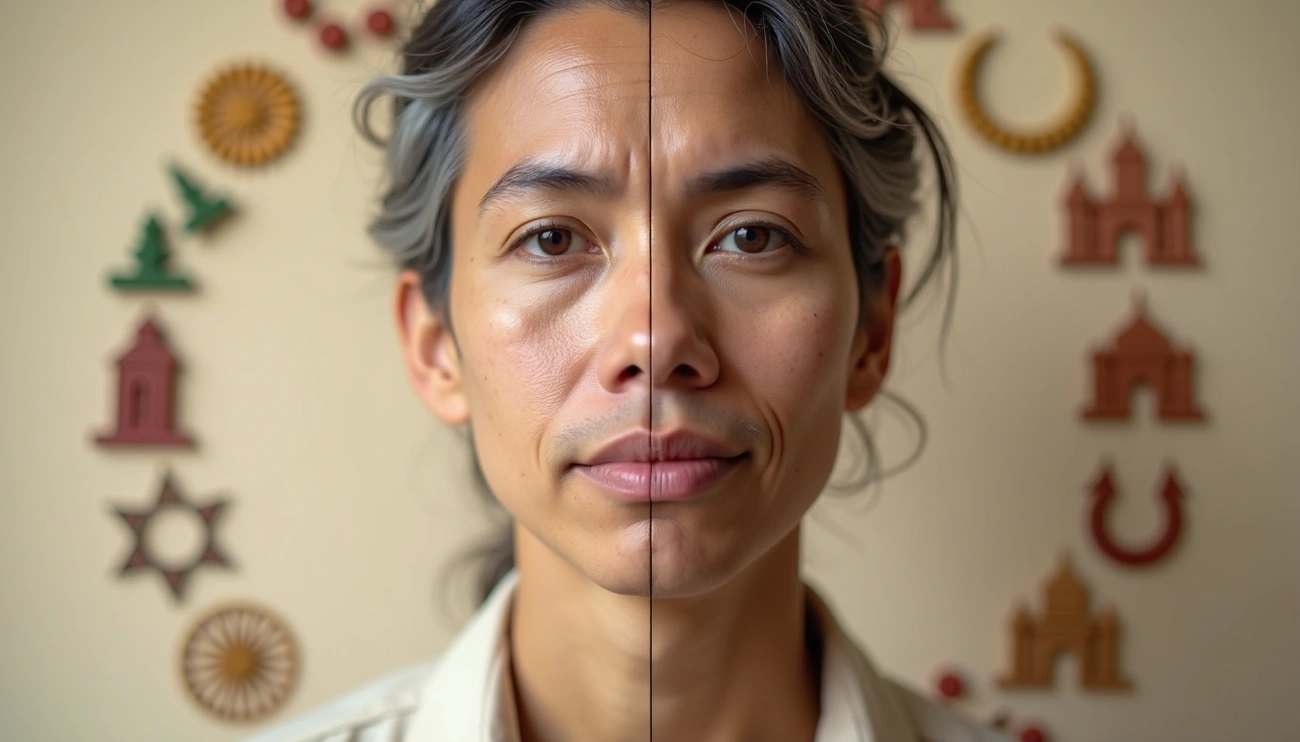
Cultural OCD Manifestations: Insights from Your Background
Picture this. Last month, I was sitting in my clinic here in Edinburgh when two clients came to see me on the same day. Both had OCD. Both experienced intrusive thoughts about contamination. But here’s where it gets fascinating—one was tormented by fears of spiritual impurity that would displease God, whilst the other obsessed about germs on door handles.
Same disorder. Completely different cultural lens.
I’m Federico Ferrarese, a cognitive behavioural therapist based in Edinburgh, working closely with individuals affected by obsessive worries and compulsive behaviours. What strikes me most about OCD isn’t just that it affects roughly 1.6% of people worldwide, regardless of where they’re born—it’s how dramatically our backgrounds shape the very thoughts that torment us.
Here’s what I find remarkable. A massive international study found that over 90% of people experienced unwanted intrusive thoughts within just three months. Think about that for a second. Nearly everyone gets these mental hiccups. The difference? For those with OCD, these thoughts become sticky, persistent, and absolutely terrifying.
But here’s the thing. While OCD shows up everywhere—from Edinburgh to Egypt, from Seoul to São Paulo—the content of those intrusive thoughts tells a story about who we are and where we come from. Contamination fears dominate in some cultures, whilst religious obsessions take centre stage in others. Symmetry concerns or forbidden thoughts each find their own cultural playground.
The World Health Organisation ranks OCD as the 11th leading cause of disability globally—putting it on par with schizophrenia in terms of how much it disrupts lives. Yet most people don’t realise how profoundly our cultural backgrounds influence which specific fears will grab hold of us and refuse to let go.
Today, I want to walk you through something I find absolutely captivating: how your cultural background doesn’t just influence what you believe—it shapes the very intrusive thoughts that might plague you. We’ll explore why a Muslim might obsess about prayer purity whilst a Christian worries about blasphemous thoughts, and why understanding these patterns could change everything about how we diagnose and treat OCD.
Ready to discover what your background reveals about the mind’s most persistent fears?
The universality of OCD and its core symptoms
So here’s something that blows my mind every time I think about it. Whether you’re sitting in my clinic here in Edinburgh, visiting a therapist in Tokyo, or seeking help in Cairo, OCD looks remarkably similar at its core. The World Health Organisation ranks OCD among the top 20 causes of disability worldwide, and that ranking holds true whether we’re talking about Scotland or South Korea.
What defines OCD across cultures
Let’s break this down. OCD has two main ingredients: obsessions (those unwanted, sticky thoughts that won’t leave you alone) and compulsions (the behaviours or mental rituals you feel you must do to make the thoughts go away). Simple enough, right?
What’s fascinating is how consistent these features are. I’ve read studies comparing OCD patients from Canada, Puerto Rico, Germany, Korea, Hong Kong, Taiwan, and New Zealand. Same basic pattern everywhere. The brain gets stuck on a thought, anxiety spikes, and the person feels compelled to do something—anything—to make it stop.
The numbers back this up. Roughly 1.1% to 1.8% of people worldwide have OCD, with some studies suggesting rates as high as 2.3%. That’s remarkably consistent when you consider how different these cultures are from each other.
Here’s what really caught my attention. Researchers compared Brazilian and American OCD patients and found similar symptom severity and age at onset. Think about that for a second. Despite the differences in language, customs, and social structures, the disorder manifests in almost identical ways.
The symptom patterns are consistent, too. Across cultures, OCD tends to cluster into four main categories:
- Symmetry and ordering obsessions and compulsions
- Forbidden or taboo thoughts (aggressive, sexual, or religious)
- Hoarding behaviours and related obsessions
- Contamination fears leading to cleaning rituals
And everywhere you go, OCD does the same thing—it steals time (usually more than an hour daily) and creates significant distress and interference with normal life.
Why intrusive thoughts are a shared human experience
Here’s a truth-bomb for you. Nearly everyone gets intrusive thoughts. That sudden image of pushing someone onto train tracks? That fleeting worry about whether you locked the door? Those inappropriate thoughts during solemn moments? Welcome to being human.
What makes OCD different isn’t having these thoughts—it’s what happens next. For most people, an intrusive thought pops up, feels weird or uncomfortable, and then fades away. But for someone with OCD, that thought gets stuck. It replays. It demands attention. And it triggers intense distress.
Think of intrusive thoughts like mental hiccups. Everyone gets them. They feel foreign to your normal thinking, cause distress, and seem impossible to control. You might have thoughts about harming loved ones, urges to do something embarrassing, or impulses to engage in dangerous behaviour.
Some researchers believe these thoughts may actually serve an evolutionary purpose—like mental alarm systems gone awry. That intrusive thought about stepping off a high place? It might be your brain’s overzealous safety system trying to keep you away from danger.
But here’s where culture comes in. While the mechanism is universal, the content isn’t. Americans and Brazilians both get intrusive thoughts, but Brazilians report more aggressive obsessions, whilst Middle Eastern samples show more religious ones. Muslim participants report more concerns about unwanted thoughts compared to Christians, regardless of what those thoughts actually contain.
Culture doesn’t change the fact that we all get these mental hiccups. But it absolutely shapes which ones stick around and cause the most distress. That’s the fascinating bit—how something so universal can be expressed so differently depending on where you’re from and what you believe.
It’s like having the same engine in different cars. The mechanism is identical, but the journey looks completely different.
How Cultural Identity Shapes OCD Expression
Here’s what I think. Your cultural identity isn’t just background noise when it comes to OCD—it’s the script that determines which fears will torment you most. After years of working with clients from diverse backgrounds, I’ve seen how profoundly culture shapes not just what we believe, but also which intrusive thoughts hold us captive and refuse to let go.
Religion, Ethnicity, and Gender Roles
Let’s start with something fascinating. Religious rituals and OCD compulsions share striking similarities—precise sequences, cleansing behaviours, and an obsession with preventing harm. It’s no wonder that faith can become both a battleground and a source of confusion for those with OCD.
Here’s what the research reveals:
- Muslim participants report more concerns about unwanted thoughts compared to their Christian counterparts
- Middle Eastern samples show higher rates of religious obsessions
- Hindu and Sikh individuals may experience fewer ritual-related symptoms due to more flexible religious practices regarding prayer timing and cleanliness.
But here’s the tricky bit. Studies show that highly religious individuals, regardless of their specific faith, report more obsessive thoughts and checking behaviours. Sometimes behaviours that might indicate OCD are viewed positively as signs of devotion, potentially delaying diagnosis and treatment.
Think about that for a second. The very qualities that might signal a problem in one culture could be celebrated as spiritual dedication in another.
Ethnicity creates its own patterns, too. African Americans show higher contamination concerns than European Americans, yet despite experiencing OCD at similar rates as White Americans (2.3% vs. 2.6%), they’re significantly less likely to receive treatment or experience symptom remission. The underrepresentation of ethnic minorities in OCD treatment services isn’t just a statistic—it’s a barrier that leaves countless people struggling alone.
Gender adds another layer. Males tend to report earlier onset and symptoms related to blasphemous thoughts, whilst females often describe symptom onset during or after puberty or pregnancy, with more contamination fears and aggressive obsessions. Women also report significantly higher comorbid depression and anxiety than men.
Socioeconomic Status and Education
Here’s something most people don’t realise. OCD doesn’t discriminate based on wealth, but poverty certainly affects how it’s experienced and treated. Individuals with diagnosed OCD are associated with lower socioeconomic status and lower incomes compared to control populations. Childhood maltreatment combined with other mental health conditions shows strong associations with diagnosed OCD.
The gender gap appears here, too. Females with OCD show significantly lower education levels than males (13.09 vs. 13.98 years). These socioeconomic factors create real barriers to care, with patients from marginalised communities often experiencing delayed diagnosis due to mistrust of healthcare systems or concerns about being misunderstood.
Sexual Orientation and Cultural Taboos
Now we reach one of the most challenging intersections—where OCD meets cultural taboos around sexuality. Sexual orientation obsessions affect about 12% of OCD sufferers, involving recurrent doubts about one’s sexual orientation or fears that others might perceive them as homosexual.
These obsessions cause significant distress specifically because they contradict the person’s sense of identity. Patients report significantly more time occupied by obsessive thoughts, more interference, and more distress compared to other OCD dimensions.
Cultural taboos intensify this suffering. As Dr Matthew Skinta notes, “both sexual orientation rumination and sexual orientation obsessions arise in response to a social environment that marginalises and mistreats sexual minority individuals”. Where sexuality remains taboo, these obsessions can be particularly isolating, with religion, community values, and social fears creating substantial obstacles.
Here’s what strikes me most. Our identities—shaped by religion, ethnicity, gender, socioeconomic status, and sexuality—don’t just influence the content of intrusive thoughts. They determine our access to understanding, support, and appropriate care.
Can you see how cultural identity becomes both the source of specific fears and the lens through which we seek help?
Religious influence on intrusive thoughts
You know what I’ve noticed after years of treating OCD? The most tormented clients often aren’t the ones with contamination fears or checking compulsions. They’re the deeply faithful ones whose minds betray their most sacred beliefs.
Just last week, a devout Catholic sat in my office, tears streaming down her face. “Federico,” she whispered, “I can’t stop having horrible thoughts about Jesus during Mass. What kind of person does that make me?”
Here’s what I think. Religion and OCD create one of the most cruel partnerships imaginable. Faith should bring comfort, yet for those with scrupulosity, their devotion becomes a prison.
Scrupulosity and religious rituals
Scrupulosity—religious OCD, essentially—affects people across every faith tradition you can imagine. These individuals don’t just worry about ordinary sins. They become consumed by fears of offending God, violating religious doctrines, or having committed some unknown transgression.
The obsessions are relentless:
- Did I blaspheme without realising it?
- Have I sinned unknowingly?
- Am I pure enough in God’s eyes?
- Will I face divine punishment for these thoughts?
But here’s where it gets particularly heartbreaking. Their compulsions often mirror genuine religious practices, making it nearly impossible to distinguish devotion from pathology. They’ll pray repeatedly until it feels “perfect,” confess perceived sins obsessively, seek constant reassurance from religious leaders, perform elaborate cleansing rituals, or engage in acts of self-sacrifice to atone for intrusive thoughts.
Research shows that approximately 5% of OCD patients report blasphemous thoughts as their primary distress. That might sound small, but imagine carrying the weight of feeling spiritually damned while desperately trying to connect with your faith.
Blasphemous obsessions in different faiths
Here’s something fascinating. While scrupulosity appears across all religions, it takes on different cultural forms depending on the faith tradition.
Christians often torment themselves about taking the Lord’s name in vain or experiencing inappropriate thoughts during prayer. Catholics face particular challenges—the concept of mortal sin can turn confession into an OCD trap, with endless worrying about whether they confessed “correctly”.
Muslims frequently struggle with waswasa—excessive doubts during their five daily prayers or ritual washing. They’ll redo ablutions countless times, fearing ritual impurity might invalidate their worship. The precise nature of Islamic practices can provide fertile ground for OCD to take root.
Jews might fixate obsessively on following halacha (Jewish law) perfectly. I’ve worked with clients who spend hours checking whether food is truly kosher or whether they’ve properly observed Sabbath rules.
Hindus and Sikhs present interesting variations. Research suggests these religions’ flexibility regarding prayer timing and cleanliness requirements might actually protect against certain OCD manifestations. Yet 36% of subjects in one study still experienced a mixture of contamination and religious obsessions.
Can you imagine how isolating this must feel? Your faith community celebrates devotion, whilst you’re secretly drowning in religious anxiety.
When devotion masks pathology
This is where things become particularly challenging. How do you distinguish genuine religious devotion from pathological scrupulosity?
The key isn’t what people do—it’s why they do it and how it affects them. True religious practice brings peace, meaning, and a sense of connection. Scrupulosity generates anxiety, dread, and isolation from the very faith it claims to honour.
Here’s what I look for in my practice:
Motivation – Are rituals performed from love and faith, or primarily from fear? Function – Does religious practice enhance life or create avoidance, missed work, and isolation? Community – Does behaviour align with religious law and community norms, or exceed them dramatically? Emotion – Does worship bring peace or generate extreme anxiety?
Here’s something that might surprise you. Even atheists and agnostics can experience moral scrupulosity, obsessing over ethical dilemmas without any religious framework. This tells us that while culture and religion provide the content for OCD, the underlying mechanism taps into something universally human—our capacity for persistent, unwanted thoughts.
Religious leaders often play a crucial role in this regard. Many clergy members recognise that scrupulous rituals aren’t genuinely religious at all. They’re anxiety-driven behaviours masquerading as devotion. That’s why education about this distinction becomes absolutely essential for effective treatment.
The tragedy? These are often the most spiritually sensitive people, whose greatest strength—their faith—becomes hijacked by their own minds.
Historical and cultural evolution of OCD
You won’t believe what people used to think about OCD. For centuries, the same intrusive thoughts and compulsive behaviours I see in my Edinburgh clinic today were blamed on demons, divine punishment, or moral failing. The journey from exorcism to evidence-based treatment tells a fascinating story about how cultural understanding shapes everything—including our approach to mental health.
From demonic possession to DSM-5
Here’s something that still amazes me. In the 14th and 15th centuries, someone experiencing blasphemous intrusive thoughts would likely be dragged to a priest for an exorcism rather than offered therapy. Evil spirits, they believed, were hijacking people’s minds. Can you imagine the additional suffering that interpretation must have caused?
The shift started slowly. By the 17th century, religious thinkers began describing obsessions and compulsions as symptoms of “religious melancholy” rather than demonic influence. Progress has been made, but we are still far from understanding the neurobiological reality we know today.
Then came the Enlightenment. Scientists started replacing spiritual explanations with medical ones. Here’s how the evolution unfolded:
- 1838: Jean Esquirol described OCD as a form of “monomania” or partial insanity
- 1877: Karl Westphal introduced the term “Zwangsvorstellung” (compelled idea)
- 1980: OCD was officially added to the DSM-III as an anxiety disorder
- 2013: Reclassified in DSM-5 as “OCD and related disorders” with its own category
That final reclassification in 2013? Massive. It acknowledged what clinicians like me had long suspected—OCD isn’t just another anxiety disorder. It has its own unique patterns, symptoms, and treatment needs. We’d moved from Freud’s “obsessional neurosis” concept all the way to modern neurobiological models focusing on brain circuitry.
How different societies interpreted compulsions
Different cultures developed their own explanations for these puzzling behaviours. Medieval Europeans might view excessive handwashing as penance for sin. Ancient Buddhist texts from 2,500 years ago describe monks engaging in repetitive sweeping behaviours that consumed their entire days—sound familiar?
Here’s an interesting case. The Zen master Hakuin (1685-1768) reportedly suffered from serious obsessional thoughts as a young man. Japanese culture at the time had no framework for understanding this as a medical condition. Meanwhile, Indian traditions sometimes integrated ritualistic behaviours into religious practices, blurring the line between devotion and compulsion.
The French came up with “folie du doute” (madness of doubt) around 1850, recognising that characteristic uncertainty that torments people with OCD. German psychiatry took a different angle, viewing OCD as an intellectual rather than emotional disorder—calling it “Grubelnsucht” (a ruminatory illness).
Each culture was trying to make sense of the same universal human experience through its own lens.
The role of superstition and magical thinking
Magical thinking—the belief that your thoughts, words, or actions can influence unrelated events—runs deep in human psychology. Throughout history, superstition served as humanity’s attempt to explain the unexplainable and control the uncontrollable.
Here’s what’s fascinating. Psychological research indicates that superstitious beliefs represent “false conceptions of causation” that are prevalent across all cultures and persist despite even the most effective education. Even more intriguing? Superstitious behaviours can occur without conscious beliefs, suggesting different brain pathways are involved.
Think about it. Many societies developed cultural rituals meant to ward off bad luck or ensure safety. In cultures with strong superstitious foundations, distinguishing between culturally acceptable rituals and OCD symptoms becomes particularly challenging.
What strikes me most about this historical journey is how it reveals OCD as a consistent human experience that’s been interpreted differently across time and place. The thoughts and behaviours haven’t changed—just our understanding of them.
Cultural Variation of OCD Symptoms by Region
Here’s what blows my mind about OCD research. When you map out symptoms across the globe, clear patterns emerge that tell stories about entire cultures. It’s like reading a psychological atlas—each region reveals what that society fears most deeply.
Let me walk you through the most striking patterns I’ve discovered.
Middle East: Religious Obsessions
The numbers here are staggering. Religious obsessions affect 60% of OCD patients in Egypt, 50% in Saudi Arabia, and 40% in Bahrain. Compare that to just 10% in the United States and 5% in England. That’s not a small difference—that’s a completely different presentation of the disorder.
Turkish studies reveal something fascinating: as you travel eastward toward other Middle Eastern countries, religious OCD symptoms increase. It’s like watching a cultural gradient play out in the mind. Muslim patients often struggle with al-woodo—the systematic cleaning before prayer—where OCD latches onto these precise religious rituals.
India: Contamination and Purity
Here’s where Hindu concepts of purity and pollution create fertile ground for OCD. Indian patients experience something called “Napak”—a contamination subtype with strong religious overtones about dirtiness and spiritual unholiness.
What struck me as particularly unique? Some Bengali Hindu communities are particularly concerned about the contamination of steamed rice. The Hindu code of ethics, with its various purification rituals, provides countless opportunities for OCD to take hold.
South America: Aggressive Themes
Brazilian research reveals something unexpected. Aggressive obsessions dominate at 69.7%, actually surpassing concerns about contamination at 53.5%. This completely inverts the typical global pattern. Researchers theorise that high urban violence rates—particularly in cities like Rio de Janeiro—may fuel these safety-related obsessions.
East Asia: Symmetry and Order
The cultural emphasis on precision and social harmony is evident in symptom patterns. Japanese samples report concerns about contamination (48%), followed closely by symmetry obsessions (42%). Korean studies reveal unique factor structures where ordering compulsions predominate.
Chinese patients show lower aggression-related symptoms (31%) compared to Italian samples (56.1%), possibly reflecting Confucian values about interpersonal harmony. The mind absorbs cultural teachings, then OCD exploits them.
Africa: Superstitions and Rituals
Limited research from Kenya found 12.2% of psychiatric inpatients met OCD criteria, with many initially attributing symptoms to witchcraft. In Benin, case studies document counting rituals and fears of contamination among young patients. Superstitious thinking provides the framework; OCD provides the torment.
Western Countries: Checking and Counting
Western presentations typically feature checking and counting compulsions. Lower religious obsessions but higher harm avoidance and responsibility concerns. Interestingly, frequent religious service attendance was negatively associated with OCD in American samples.
Can you see the pattern? Each region’s deepest cultural concerns become OCD’s favourite playground. It’s a universal psychological tendency to wear local clothes.
Cultural Causes of OCD and Environmental Stressors
Let me tell you something that struck me during a session last year. I was working with a young woman who’d moved from Pakistan to Edinburgh for university. Within six months, her checking behaviours had exploded. Door locks, gas taps, assignment submissions—she was spending hours each day in ritual loops.
Here’s what fascinated me. Back home, her family’s collective decision-making had always buffered her anxiety. But suddenly, in an individualistic culture where she had to navigate everything alone, her brain latched onto OCD as a way to manage the overwhelming responsibility.
That’s when I realised something crucial: culture doesn’t just shape how OCD shows up—it can actually trigger it in the first place.
Research consistently shows that stress acts as a primary environmental trigger for both developing OCD and worsening existing symptoms. But here’s the thing most people miss: cultural contexts don’t just provide the content for our fears—they create the very stressors that can flip the OCD switch.
Collectivist vs Individualist Societies
Think about it this way. Imagine you’re wired to value group harmony above all else, but suddenly you’re dropped into a culture that rewards individual achievement and self-reliance. Or the reverse—you’re fiercely independent but find yourself in a society where every decision affects the extended family’s reputation.
That cultural mismatch? It’s like psychological sandpaper.
Collectivist cultures, which prioritise group harmony over individual needs, create a double-edged sword for OCD risk. On one side, these environments foster stronger social bonds that can buffer against certain stressors. But here’s the catch—collectivist contexts also “increase anxiety by increasing the sense of responsibility with other individuals”.
Meanwhile, individualistic societies often promote competition and can lead to social isolation. Different pressure, same potential for psychological distress.
Studies comparing Belgian and Turkish samples found something fascinating: in individualistic Boston, people with collectivist values showed more OCD symptoms, whilst in collectivistic Istanbul, individualistic people struggled more with personality issues.
The pattern is clear. It’s not about which cultural orientation is “better”—it’s about the clash between who you are and what your environment expects. That misalignment becomes fertile ground for anxiety disorders like OCD.
Discrimination, Trauma, and Social Pressure
Here’s a statistic that should make us all pause. Early adolescents who experience racial discrimination have 2.77 times higher odds of developing probable OCD. Sexual orientation discrimination? 2.51 times. Weight discrimination? Also 2.51 times.
Even worse, experiencing multiple forms of discrimination increases OCD odds by 1.67 times. It’s as if each form of marginalisation adds another weight to an already struggling nervous system.
This aligns perfectly with Minority Stress Theory, which suggests that stigmatisation based on marginalised identities creates chronic stress that eventually manifests as psychological symptoms.
What I find remarkable is how different cultures have developed varied coping mechanisms:
- Latin American individuals often lean on familismo—a deep connection with relatives—to manage stressful situations
- African American students frequently turn to religious activities for stress management
- Asian populations tend to use emotion-focused responses
However, when these cultural coping mechanisms are unavailable or ineffective in new environments, vulnerability increases significantly.
Cultural Stress and Its Impact on Symptom Onset
From a biological standpoint, stress doesn’t just trigger OCD psychologically—it rewires the brain. When stress activates the hypothalamic-pituitary-adrenal axis, cortisol levels spike. Many studies confirm that elevated cortisol is a hallmark of OCD.
But here’s where it gets interesting. Stress also affects emotional regulation—something people with OCD already struggle with. Instead of using healthy reappraisal strategies, those with OCD often suppress emotions. It becomes a vicious cycle: cultural stressors trigger poor emotional coping, which amplifies the stress response, which feeds more OCD symptoms.
Can you see how this creates the perfect storm?
There’s even an evolutionary angle here. Some researchers speculate that certain OCD traits—being organised, meticulous, perfectionistic—might have provided adaptive advantages in specific cultural contexts. This suggests that cultures highly valuing precision and order might inadvertently reinforce OCD-like tendencies until they cross into dysfunction.
Think about it. If your culture prizes exactness and you’re already predisposed to perfectionism, those traits might be celebrated right up until they become imprisoning rituals.
The takeaway? Culture isn’t just the backdrop for OCD—it’s often the trigger that turns genetic vulnerability into active symptoms.
Challenges in diagnosis and treatment across cultures
Here’s something that frustrates me as a clinician. Last week, a young Muslim woman sat in my office telling me she’d been bouncing between doctors for two years. Her GP thought she had anxiety. A counsellor suggested she was just “very religious.” Another therapist wondered if it was depression.
Nobody recognised her scrupulosity for what it was: OCD.
She’s not alone. The truth is, cultural factors create massive blind spots in how we diagnose and treat OCD. Even when the condition shows up in identical ways neurologically, our cultural lenses can make all the difference between proper care and years of suffering.
Misdiagnosis due to cultural misunderstanding
You won’t believe this statistic. Studies show that 40-50% of OCD case vignettes presented to doctoral-level psychologists and primary care physicians weren’t correctly identified as OCD. Nearly half. These are trained professionals, and they often miss it.
Here’s what makes it worse. Taboo thoughts—sexual, aggressive, and religious obsessions—are more likely to fly under the radar than contamination obsessions. Imagine a devout Christian terrified by blasphemous intrusive thoughts. To one clinician, that might appear to be a spiritual crisis. To another who understands OCD, it’s a clear presentation of scrupulosity.
The problem runs deeper than individual clinician knowledge. Current clinical tools often fail to identify OCD in patients whose behaviours seem acceptable within their cultural context. A Hindu person performing elaborate purification rituals might be seen as “very spiritual” rather than struggling with contamination OCD. Cultural competency gaps among clinicians fuel these misdiagnoses, especially when working with patients from different ethnic and religious backgrounds.
I’ve seen this repeatedly in my practice here in Edinburgh. Cultural behaviours can mask pathology, and pathology can be dismissed as a cultural norm.
Barriers to accessing mental health care
Even when OCD gets properly diagnosed, the battle for proper care is far from over. The statistics here are honestly shocking.
Only 17.5% of people with a lifetime OCD diagnosis reported using mental health services in the past year. Just 42.7% reported service use at any point in their lives—making it the lowest rate of all mental disorders except substance abuse. Think about that. We’re talking about a condition that can completely derail someone’s life, yet most sufferers never access care.
The barriers are real and substantial:
- Treatment delays range from several months to over a year in some regions
- Only 20% of individuals with OCD receive standard therapy at their first point of contact
- Quality concerns plague the system, with many receiving inadequate treatment
Treatment gap rates for OCD vary between 40% and 90% globally. That means up to nine out of ten people who need help aren’t getting it. Longer delays to treatment correlate with greater OCD severity, more psychiatric comorbidity, and older age at first contact.
These aren’t just numbers on a page. Behind each statistic is someone like my client—suffering in silence, misunderstood by systems meant to help them.
The need for culturally sensitive assessment tools
Here’s where the system really breaks down. Current assessment instruments have been primarily normed and validated on White samples, making them woefully inadequate for diverse populations.
The research representation problem is staggering. African Americans represent less than 2% of all participants in OCD studies, despite experiencing OCD at similar rates to the general population. How can we develop effective treatments and assessments when we’re barely studying the populations we aim to serve?
Culturally competent clinical practice requires clinicians to conduct assessments that account for unique cultural factors influencing OCD presentation. Mental health professionals must recognise the significance of the connection between OCD and culture, taking sociocultural context into account during clinical evaluation.
This isn’t just about being politically correct. Cultural competence represents a fundamental requirement for providing effective, patient-centred care. Without it, we’re essentially flying blind, missing diagnoses and failing to help the very people who need our assistance the most.
The path forward requires acknowledging these gaps honestly and working systematically to address them. Because everyone deserves proper recognition and treatment of their OCD, regardless of their cultural background.
Culturally Adapted OCD Treatments and Interventions
You know what I’ve learned after years of treating OCD clients from different backgrounds here in Edinburgh? One-size-fits-all therapy simply doesn’t work. I’ve witnessed brilliant, evidence-based treatments fail because they didn’t take into account a client’s cultural reality. But when we adapt our approach to honour someone’s background whilst still tackling their OCD? That’s when real change happens.
Religion-Adapted CBT (R-CBT)
Religion-adapted Cognitive Behavioural Therapy (CBT) shows remarkable results, often matching or exceeding those of secular CBT. For clients whose OCD latches onto religious content, blending faith elements with traditional CBT creates something powerful.
R-CBT works through multiple pathways: it creates supportive therapeutic spaces, generates positive emotions that actually impact immune function, utilises familiar religious rituals therapeutically, and builds upon existing coping styles. The beauty is that clients can modify their distorted thinking patterns whilst keeping their core beliefs intact.
I’ve seen this work firsthand. A devout Muslim client was tormented by thoughts during prayer, convinced he was offending Allah. Traditional CBT felt like an attack on his faith. But R-CBT? It helped him distinguish between genuine devotion and OCD’s hijacking of his religious practice.
Family and Community Involvement
Here’s something fascinating. About 95% of OCD patients’ families end up accommodating symptoms—providing endless reassurance or joining in rituals. Instead of fighting this, why not use it therapeutically?
Family-inclusive treatment produces substantial improvements in both OCD symptoms and overall functioning. Japanese researchers developed the Family-Enhanced Exposure Response Prevention programme, recognising that family dynamics affect over 40% of OCD cases there. They brought families into treatment as allies, not obstacles.
This approach particularly resonates in collectivist cultures where family involvement isn’t just preferred—it’s expected.
Respecting Beliefs While Reducing Compulsions
The key challenge? Distinguishing between healthy cultural practices and pathological compulsions. Culturally adapted CBT involves modifications such as incorporating family members into sessions, utilising culturally relevant homework assignments, integrating local stories and metaphors, and directly addressing religious or cultural beliefs.
As clinicians, we need cultural humility. Mental wellness looks different across populations. What appears excessive in one culture might be perfectly normal in another. The goal isn’t to eliminate cultural practices—it’s to free people from the suffering that OCD creates within their cultural context.
Can you imagine how liberating it must feel to receive treatment that honours who you are whilst helping you reclaim your life from OCD?
Conclusion
Here’s what strikes me most after years of working with OCD across different cultural backgrounds. Every single client who walks into my Edinburgh clinic carries their entire world with them—their faith, their family expectations, their cultural fears, and the stories of their ancestors. OCD doesn’t just hijack their thoughts; it speaks their cultural language fluently.
I think about that Muslim client who couldn’t tell if his prayer was “pure enough” and the Hindu woman who spent hours ensuring her kitchen met traditional cleanliness standards. Same underlying mechanism. Completely different cultural expression. Both deserving of understanding, not judgment.
What moves me most is this: whilst OCD affects that consistent 1.6% of people worldwide, the content of their suffering tells such intimate stories about identity, belonging, and the values they hold most dear. A Christian fears blasphemy. A perfectionist culture breeds symmetry obsessions. Areas with high violence see more aggressive, intrusive thoughts.
The journey from viewing these symptoms as demonic possession to understanding them as neurobiological patterns shows how far we’ve come. Yet those staggering treatment gaps—40-90% of people still not receiving proper care—remind me how much work lies ahead.
Here’s what gives me hope. When we adapt treatments to honour cultural backgrounds, outcomes improve dramatically. Religion-adapted CBT works. Family involvement helps. Cultural humility in the therapy room changes everything.
I’ve witnessed clients reclaim their lives when they finally felt understood—not despite their cultural background, but because of how we honoured it in their treatment. That moment when someone realises their intrusive thoughts don’t make them a bad Muslim, Christian, or Hindu—that their OCD hijacked their faith but doesn’t define their devotion—that’s when real healing begins.
Cultural background doesn’t create OCD, but it absolutely shapes how we experience and express it. Understanding these patterns isn’t just academically interesting—it’s essential for delivering compassionate and effective care.
So here’s my question for you: How might understanding your own cultural lens on intrusive thoughts change your relationship with them? What would it mean to receive treatment that honours rather than dismisses the cultural context of your fears?
The intersection of culture and OCD teaches us something profound about human psychology—that whilst our brains share universal patterns, our hearts beat to the rhythm of the cultures that shaped us.
Key Takeaways
Understanding how cultural background influences OCD manifestations can transform both recognition and treatment of this universal condition, affecting 1.6% of people worldwide.
• OCD symptoms reflect cultural values: Religious obsessions dominate in Middle Eastern populations (60% in Egypt), contamination fears prevail in India, whilst Western countries show more checking behaviours.
• Cultural misunderstanding leads to misdiagnosis: 40-50% of OCD cases are incorrectly identified by healthcare professionals, particularly when symptoms involve culturally acceptable religious or ritualistic behaviours.
• Treatment gaps are massive globally: Only 17.5% of people with OCD access mental health services yearly, with 40-90% remaining undertreated due to cultural barriers and inadequate resources.
• Culturally adapted therapy works better: Religion-adapted CBT and family-inclusive treatments show superior outcomes compared to standard approaches, especially for patients from collectivist cultures.
• Discrimination increases OCD risk significantly: Experiencing racial, sexual orientation, or weight discrimination increases OCD odds by 2.5-2.8 times, highlighting how cultural stressors trigger symptoms.
The intersection of universal psychological mechanisms with cultural contexts creates unique expressions of OCD, making culturally sensitive assessment and treatment essential for effective care across diverse populations.
FAQs
Q1. How does cultural background influence OCD symptoms? Cultural background significantly shapes OCD manifestations. For instance, religious obsessions are more common in Middle Eastern populations, contamination fears prevail in India, and Western countries show higher rates of checking behaviours. Cultural values, beliefs, and practices have a direct influence on the content of obsessions and the nature of compulsions.
Q2. Why are OCD symptoms often misdiagnosed across different cultures? Misdiagnosis often occurs due to cultural misunderstanding. Healthcare professionals may struggle to distinguish between culturally normative behaviours and OCD symptoms, especially when dealing with patients from different ethnic or religious backgrounds. This can lead to 40-50% of OCD cases being incorrectly identified.
Q3. What are the main barriers to accessing OCD treatment worldwide? Major barriers include limited help-seeking behaviour, with only 17.5% of people with OCD accessing mental health services yearly. Long waiting periods for treatment, quality concerns, and cultural stigma also contribute to significant treatment gaps, ranging from 40-90% globally.
Q4. How effective are culturally adapted OCD treatments? Culturally adapted treatments, such as Religion-adapted Cognitive Behavioural Therapy (R-CBT) and family-inclusive approaches, have shown superior outcomes compared to standard therapies. These methods respect cultural beliefs while effectively addressing OCD symptoms, particularly benefiting patients from collectivist cultures.
Q5. Can discrimination increase the risk of developing OCD? Yes, experiencing discrimination can significantly increase the risk of developing OCD. Studies show that racial, sexual orientation, or weight discrimination can increase the odds of developing OCD by 2.5 to 2.8 times. This highlights the important role that cultural stressors play in triggering OCD symptoms.




0 Comments